Last reviewed June 2026. This article is for education. It is not medical advice, and it is not intended to diagnose, treat, cure, or prevent any disease. Talk with your clinician before changing a supplement routine.
Walk down any vitamin aisle and the multivitamins all start to look the same. Same colorful bottles, same big promises, same long ingredient lists. But one word on a small number of those labels decides how the product works inside your body: methylated.
A methylated multivitamin is built around the active, body-ready forms of vitamins, not the cheap synthetic versions your body has to convert first. For a lot of people that distinction is the difference between a vitamin that does something and one that mostly passes through. This guide covers what a methylated multivitamin is, how it differs from a regular one, and how to tell whether you should be taking it.
What is a methylated multivitamin?
A methylated multivitamin is a multivitamin that delivers key nutrients, especially the B vitamins folate and B12, in their already-active, methylated forms. Instead of folic acid, it uses methylfolate (5-MTHF). Instead of cyanocobalamin, it uses methylcobalamin. These are the same forms your body would normally have to manufacture on its own before it could use the nutrient at all.
A regular multivitamin hands your body raw materials and assumes it can assemble them. A methylated multivitamin hands your body the finished, usable parts.
Methylation, in plain English
"Methylation" sounds clinical, but the concept is simple. Roughly a billion times per second, your body attaches tiny chemical tags called methyl groups onto other molecules. This methylation cycle helps support normal energy metabolism, nervous system function, the formation of red blood cells, and the body's normal processing of homocysteine.
To run that cycle, your body needs B vitamins in their active forms. Folic acid and synthetic B12 are not active. They have to be converted by enzymes first. When that conversion is slow or incomplete, the raw synthetic vitamins can sit around unused. A methylated multivitamin sidesteps the bottleneck by supplying the forms that are ready to go.
Methylated vs regular multivitamin: what is actually different
| Methylated multivitamin | Regular multivitamin | |
|---|---|---|
| Folate form | Methylfolate (5-MTHF), active | Folic acid, synthetic, must be converted |
| B12 form | Methylcobalamin, active | Cyanocobalamin, synthetic, must be converted |
| Conversion required | Minimal, body-ready | Yes, depends on your enzymes |
| MTHFR-friendly | Yes, designed around it | Not specifically |
| Typical cost | Higher (premium forms) | Lower (commodity forms) |
The folate difference is the headline. We cover it in depth in methylfolate vs folic acid, and the B12 side in methylcobalamin vs cyanocobalamin. Together those two swaps are what make a multivitamin "methylated."
The forms that make a multivitamin truly methylated
Not every label that says "methylated" earns the word. A methylated formula uses the active forms across the board, not one token ingredient for marketing. Look for these:
- Methylfolate (L-5-MTHF) instead of folic acid. This is the most important one. Read our complete 5-MTHF guide for the full picture.
- Methylcobalamin (and sometimes adenosylcobalamin) instead of cyanocobalamin.
- Pyridoxal-5-phosphate (P5P), the active form of vitamin B6.
- Riboflavin-5-phosphate, the active form of B2.
When a formula carries the active forms together, the B vitamins support one another inside the methylation cycle rather than leaving your body to do the conversion work alone.
Who needs a methylated multivitamin?
This is the real question, and the honest answer is that some people benefit far more than others.
People with MTHFR gene variants
The MTHFR gene codes for an enzyme that helps activate folate. Common variations in this gene are widespread in the general population, and they can reduce how efficiently the body converts synthetic folic acid into the active form it actually uses. For someone with these variants, the pre-activated forms in a methylated multivitamin remove a conversion step their genetics may handle slowly. If genetic testing has ever flagged MTHFR for you, this is the formula type aimed at you.
People who feel nothing from regular multivitamins
If you have taken a standard multivitamin for months and never noticed a thing, the form may be part of the story. Synthetic vitamins that are not being converted efficiently do not do much. Switching to the active forms is a reasonable next step to discuss with your clinician.
People focused on energy, mood, and methylation support
Because the methylation cycle is tied to normal energy metabolism and nervous system function, people who care about supporting those areas often gravitate to the active forms. This is general wellness support, not a treatment claim.
People who simply want the cleaner, body-ready option
You do not need a diagnosis to prefer the active forms. Plenty of people want the version of a multivitamin that skips the synthetic ingredients and the conversion guesswork.
Who probably does not need to overthink it
If you tolerate a standard multivitamin well, convert folate normally, and feel good, you are not doing anything wrong. A methylated multivitamin is the upgrade for people who want the active forms or who have a reason to bypass conversion. It is not a fix for a problem everyone has. As always, your clinician is the right person to help you decide.
A methylated multivitamin built the right way
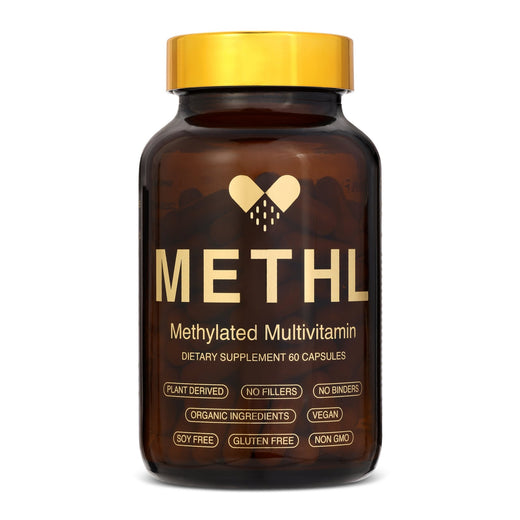
METHL uses methylfolate and methylcobalamin, plus a fermented organic greens and immunity blend. Active forms across the board, no folic acid, no synthetic B12.
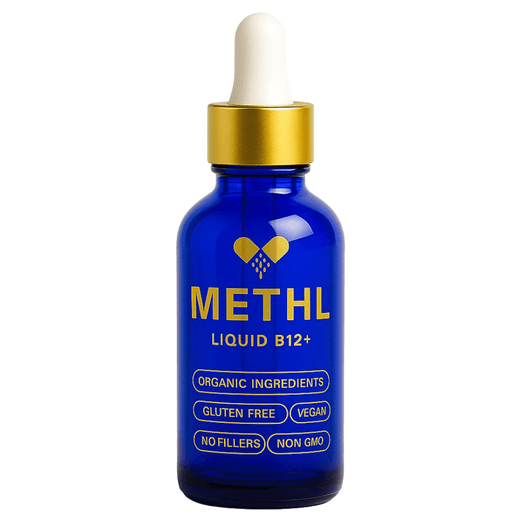
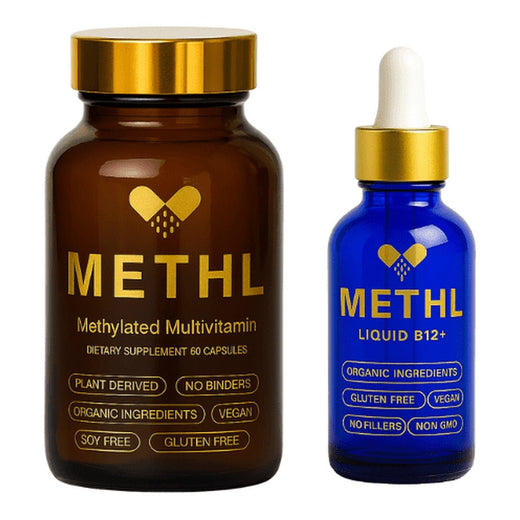
Shop the METHL Methylated Multivitamin See the Multivitamin + Liquid B BundleHow we formulate METHL’s methylated multivitamin — and why
Because we build one ourselves, here is the first-hand reasoning behind the choices on our label — the decisions our formulation team actually made, not generic advice.
We started with the B vitamins, because that is where methylation lives. We use 5-MTHF (methylfolate) instead of folic acid, and methylcobalamin instead of cyanocobalamin, so the folate and B12 arrive in the active, body-ready forms rather than versions your body has to convert first. We chose P-5-P (pyridoxal-5-phosphate) for the same reason on B6 — it is the shape your body already uses. For the large share of people whose bodies convert folic acid slowly, that decision is the whole point: the formula does not depend on an efficient conversion step.
Around those active B vitamins we added an immunity blend — vitamin C from organic acerola cherry and amla berry rather than isolated ascorbic acid, plus zinc citrate and selenium — and a fermented greens complex. We included the fermented greens specifically to support absorption across the whole formula, since fermentation pre-digests plant material and can make its nutrients easier for your gut to take up. And we left out synthetic fillers: if you are already choosing active vitamin forms because you care what reaches your cells, it makes no sense to surround them with binders and colorants that do nothing for you.
The goal was never a longer ingredient list. It was making sure the things on the list are in forms your body can actually use.
You can see those choices reflected in our best methylated multivitamin lineup.
How to choose a methylated multivitamin
- Check the folate line first. It must say methylfolate, L-methylfolate, or 5-MTHF. If it says folic acid, it is not a methylated formula no matter what the front of the bottle claims.
- Confirm the B12. Look for methylcobalamin, not cyanocobalamin.
- Watch for "blend" padding. Some labels list an active form to look premium, then add the synthetic version to cut costs. Cleaner formulas use the active forms only.
- Mind the extras. Greens, immunity, and digestive support are nice, but they do not replace getting the core B-vitamin forms right.
When you are ready to compare specific products side by side, our best methylated multivitamin buyer's guide does exactly that, including how METHL stacks up against the names you have heard of.
Keep reading
- Methylcobalamin vs cyanocobalamin
- Best methylated multivitamin: buyer's guide
- Best supplements for MTHFR
- What are methylated vitamins? A simple guide
- Methylated vitamin C
Frequently asked questions
What does "methylated" mean on a vitamin label?
It means the vitamin is in its active, body-ready form, the same form your body would normally convert it into. The most important examples are methylfolate (instead of folic acid) and methylcobalamin (instead of cyanocobalamin).
Is a methylated multivitamin better than a regular one?
For people who convert synthetic vitamins slowly, including many with MTHFR gene variants, the active forms remove a conversion step and are easier for the body to use directly. For people who convert normally, a regular multivitamin may work fine. The methylated version is the body-ready, cleaner option.
Do I need an MTHFR test before taking one?
No. Many people choose methylated forms simply because they prefer the active, synthetic-free option. Testing can be informative, but it is not required to take a methylated multivitamin. Talk with your clinician about what is right for you.
Can I take a methylated multivitamin every day?
These nutrients are the same active forms found naturally in the body and food. As with any supplement, follow the product label and check with your clinician, especially if you take medication or are pregnant.
What is the most important ingredient to look for?
Methylfolate (5-MTHF). The shift from folic acid to methylfolate is the single change that defines a methylated multivitamin.
Sources: National Institutes of Health, Office of Dietary Supplements, fact sheets on Folate and Vitamin B12 (ods.od.nih.gov). National Library of Medicine, MTHFR gene overview (medlineplus.gov/genetics). This article supports general wellness education and makes structure and function statements only. It does not diagnose, treat, cure, or prevent any disease.