
Last reviewed June 2026. This article is for education. It is not medical advice, and it is not intended to diagnose, treat, cure, or prevent any disease. Talk with your clinician before changing a supplement routine.
Methylfolate and folic acid are two forms of the same B vitamin (vitamin B9), but they are not interchangeable in the body. Folic acid is a synthetic form that your body has to convert through several steps before it can be used, while methylfolate (L-5-MTHF) is the active form your cells can put to work right away. That single difference is why the methylfolate vs folic acid question matters for anyone choosing a multivitamin or prenatal. For a deeper look at the active form, see our complete guide to L-methylfolate (5-MTHF).
If you want to skip the chemistry and just shop the active form, you can browse our methylated multivitamins & B vitamins made with 5-MTHF instead of synthetic folic acid. Still, the form on the label is one of the most important details in any supplement, and it's worth knowing why.
What is the difference between methylfolate and folic acid?
Folate is the umbrella term for vitamin B9. It shows up in two very different forms on supplement labels:
- Folic acid: a fully oxidized, synthetic form created in a lab. It does not occur in nature. It is inexpensive and shelf-stable, which is why it has been the default in fortified foods and most cheap multivitamins for decades.
- Methylfolate (L-5-MTHF, or L-methylfolate): the form of folate that actually circulates in your blood and crosses into your cells. It is the end product your body is trying to make, so it is sometimes called the "active" or "bioavailable" form.
Natural folate from leafy greens, legumes, and avocado already arrives mostly in reduced, usable forms. Synthetic folic acid is the outlier. Before your body can do anything useful with it, it has to be converted, and that conversion is where things can go wrong.

How does the body convert folic acid?
Folic acid does not work the moment you swallow it. Your body has to run it through a multi-step pathway to turn it into usable folate. In simple terms, folic acid is first reduced by an enzyme called dihydrofolate reductase (DHFR), then passed down the line until the enzyme MTHFR (methylenetetrahydrofolate reductase) finishes the job by converting it into L-5-MTHF, the active methylfolate your cells can actually use.
Methylfolate skips most of that assembly line. Because it is already the finished, active form, it does not depend on the MTHFR conversion step the way folic acid does. For people whose conversion machinery runs slowly, that head start can make a meaningful difference.
Why doesn't everyone convert folic acid well?
The MTHFR gene gives your body the instructions to build the MTHFR enzyme. Common variations in this gene (such as the C677T variant) are widespread in the general population, and they can reduce how efficiently the enzyme converts folic acid into active folate. Someone with a reduced-function variant may convert synthetic folic acid more slowly than someone without it.
This is the core of the methylfolate vs folic acid debate. If your conversion is efficient, your body can handle folic acid reasonably well. If it is sluggish, supplementing with the already-active methylfolate form bypasses the bottleneck entirely. Because you can't see your genetics on a label, many people simply choose the active form as a hedge. If you want to understand the gene itself, our complete MTHFR gene support guide walks through the variants and what they mean for your vitamins.
What is unmetabolized folic acid (UMFA)?
When you take more folic acid than your body can convert in one pass, some of it can circulate in the bloodstream in its unconverted form. Researchers call this unmetabolized folic acid, or UMFA. It tends to appear more often with higher folic acid intakes, particularly when intake outpaces conversion capacity.
Because methylfolate is already the active form, it does not leave the same pool of unconverted synthetic folic acid behind. For people who prefer to minimize UMFA, choosing the methylated form is a straightforward way to do it. This is one of the practical, real-world reasons brands have moved toward 5-MTHF.
Is methylfolate better than folic acid?
"Better" depends on who you are. For a person with fully efficient folate metabolism, folic acid can still raise blood folate levels. But methylfolate has a few clear practical advantages:
- No conversion required. It is already the active form, so it does not depend on MTHFR efficiency.
- The form your body already uses. L-5-MTHF is the same form that naturally circulates in your blood.
- Less reliance on the conversion bottleneck. This helps if you carry a common reduced-function MTHFR variant and don't know it.
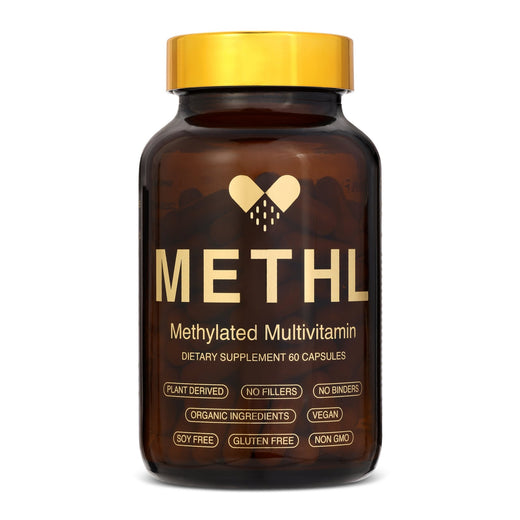
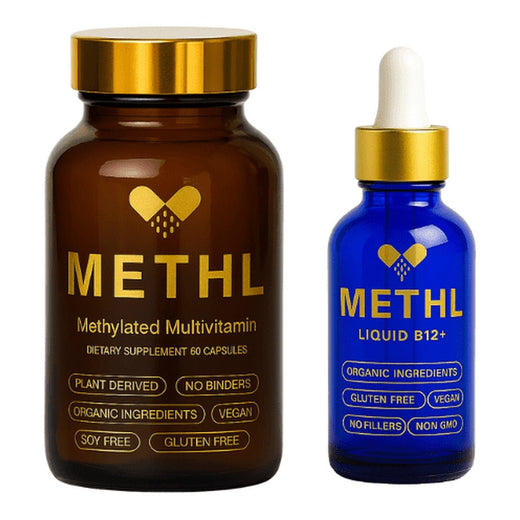
This is exactly why we built our METHL methylated multivitamin around 5-MTHF folate, methylcobalamin B12, and P5P (active B6) instead of the cheaper synthetic forms, alongside fermented organic greens, third-party testing, and a vegan, non-GMO, made-in-the-USA formula. The goal is a multivitamin that doesn't make your body do extra work just to use it.
How to choose between methylfolate and folic acid
When you're comparing labels, here is what to look for:
- Read the form, not just the amount. A label can show a high folate number but still use synthetic folic acid. Look for "L-5-MTHF," "L-methylfolate," "methylfolate," or "5-MTHF."
- Check the rest of the B vitamins. A genuinely methylated formula usually pairs methylfolate with methylcobalamin (active B12) and P5P (active B6), not cyanocobalamin and plain pyridoxine.
- Watch the dose language. Folate is listed in DFE (dietary folate equivalents). Don't assume a big number means a better form.
- Consider your own context. Family history, a known MTHFR variant, pregnancy planning, or simply wanting the form your body uses are all reasonable reasons to choose methylfolate.
If you'd rather not decode every label yourself, start with our hub of methylated multivitamins and B vitamins, where every formula uses the active forms by default.
Where does natural folate come from?
Before fortification and supplements, people got folate the original way: from food. The natural folate in whole foods already arrives in reduced, body-ready forms, closer to methylfolate than to synthetic folic acid. Some of the richest dietary sources include:
- Dark leafy greens. Spinach, kale, romaine, and other greens are among the most concentrated natural folate sources. The word "folate" even comes from the Latin folium, meaning leaf.
- Legumes. Lentils, chickpeas, and beans deliver folate alongside fiber and plant protein.
- Avocado, asparagus, and broccoli. Everyday vegetables that quietly add up.
- Citrus and seeds. Oranges, sunflower seeds, and nuts round out a folate-friendly plate.
Food first is always a smart foundation. A methylated multivitamin simply backs that up with the same active form your body would extract from those greens, which is part of why our formula is built around fermented organic greens in addition to 5-MTHF.
Why the rest of the B vitamins matter too
Folate doesn't work alone. Methylfolate is part of a larger process called methylation, and it relies on partner nutrients to function smoothly, most importantly active B12 (methylcobalamin) and active B6 (P5P). A formula that uses methylfolate but pairs it with cheap, inactive B12 and B6 is only doing half the job. That's why a genuinely "methylated" multivitamin uses the active forms across the board, not just for folate. When you're comparing methylfolate vs folic acid on a label, glance at the B12 and B6 lines too. They tell you whether the brand is serious about active forms or just marketing one ingredient.
Are there downsides to methylfolate?
Methylfolate is generally well tolerated. As with any supplement, the right dose matters, and it is always sensible to talk with your healthcare provider before starting something new, especially during pregnancy, if you take prescription medication, or if you have a diagnosed health condition. The point of choosing methylfolate is not that "more is better," but that the form your body uses requires less conversion work to do its job.
Frequently asked questions
Is methylfolate the same as folate?
Folate is the general term for vitamin B9. Methylfolate (L-5-MTHF) is the specific active form of folate that your body uses directly. Folic acid is a separate, synthetic form that must be converted into methylfolate before it can be used.
Can I take methylfolate instead of folic acid?
Many people choose methylfolate specifically because it is the already-active form and doesn't rely on the MTHFR conversion step. If you're switching forms or planning a pregnancy, confirm the right amount with your healthcare provider.
Does everyone need methylfolate?
Not necessarily. People with efficient folate metabolism can still use folic acid. But because reduced-function MTHFR variants are common and you can't tell from a label, choosing the active methylfolate form is a simple, safe way to cover your bases.
How do I know if a multivitamin uses methylfolate?
Read the supplement facts panel. Look for "L-5-MTHF," "L-methylfolate," or "methylfolate." If it only says "folic acid," it's the synthetic form. A truly methylated formula will also typically use methylcobalamin B12 and P5P B6.
Is folic acid bad for you?
Folic acid isn't "bad." It has helped reduce folate deficiency for decades. The methylfolate vs folic acid distinction is about efficiency and form: methylfolate is the active version your body uses directly, while folic acid depends on a conversion step that varies from person to person.
The bottom line
Methylfolate and folic acid both deliver vitamin B9, but methylfolate is the active form your body can use without an extra conversion step, while folic acid is a synthetic form that depends on the MTHFR pathway working efficiently. If you'd rather not gamble on your own conversion capacity, the simplest move is to choose the methylated form. Explore our full range of methylated multivitamins & B vitamins, or start with the METHL methylated multivitamin built around 5-MTHF, methylcobalamin, and P5P.