
Last reviewed June 2026. This article is for education. It is not medical advice, and it is not intended to diagnose, treat, cure, or prevent any disease. Talk with your clinician before changing a supplement routine.
L-methylfolate, also written 5-MTHF or L-5-MTHF, is the active, body-ready form of folate (vitamin B9). It is the same molecule your cells make from food before they can use it for DNA building, red blood cell formation, and methylation. Unlike synthetic folic acid, which has to be converted through several enzyme steps first, L-methylfolate is already in the form your body puts to work. That single difference is why so many people now look for "5-MTHF" on a label instead of plain folic acid.
If you'd rather skip the chemistry and shop the active form directly, you can browse our methylated multivitamins & B vitamins formulated with 5-MTHF instead of synthetic folic acid. The form of folate on your label is one of the most important details in any supplement, so it pays to understand what L-methylfolate is and who benefits most from it.
What is L-methylfolate (5-MTHF)?
Folate is the umbrella name for vitamin B9. It exists naturally in foods like leafy greens, legumes, and avocado, and your body keeps a pool of it in several closely related chemical forms. The form that circulates in your blood and crosses into your cells, including across the blood-brain barrier, is L-5-methyltetrahydrofolate, abbreviated L-5-MTHF or L-methylfolate.
You can think of L-methylfolate as the finished product at the end of the folate assembly line. Whether you eat folate from spinach or take synthetic folic acid from a tablet, your body works to turn it into this active methylfolate so it can drive the reactions that depend on it. When you supplement with 5-MTHF directly, you're supplying that finished form rather than asking your body to manufacture it.

L-methylfolate vs folic acid: what's the difference?
Folic acid and L-methylfolate are both forms of vitamin B9, but they are not interchangeable in the body. The difference comes down to how much work your body has to do before the vitamin is usable:
- Folic acid is a fully oxidized, synthetic form made in a lab. It does not occur in nature. It's inexpensive and shelf-stable, which is why it has been the default in fortified foods and most low-cost multivitamins for decades. Before your body can use it, it has to be reduced and converted through several enzyme steps.
- L-methylfolate (5-MTHF) is the active form that already circulates in your blood. Because it's the end product of that conversion, it doesn't depend on the final enzyme step the way folic acid does.
The conversion of folic acid runs through an enzyme called dihydrofolate reductase (DHFR) and then, at the last step, through MTHFR (methylenetetrahydrofolate reductase), which produces L-5-MTHF. For a deeper side-by-side breakdown of the two forms, see our guide on methylfolate vs folic acid.
How does the MTHFR enzyme fit in?
The MTHFR gene carries the instructions your body uses to build the MTHFR enzyme. That enzyme performs the final step that turns folate into L-5-MTHF, the active form. Common variations in the MTHFR gene (the C677T and A1298C variants are the most studied) are widespread in the general population and can reduce how well the enzyme works.
If you carry a reduced-function variant, your body may convert synthetic folic acid into active folate more slowly than someone without it. Supplementing with L-methylfolate sidesteps that final conversion step because you're providing the form the enzyme would have produced anyway. You can't read your genetics off a supplement label, so many people choose the active form as a practical hedge. If you want to understand the gene itself, our complete MTHFR gene support guide walks through the variants and what they mean for your vitamins.
Why does 5-MTHF cross the blood-brain barrier?
L-methylfolate is the folate form that the body transports into the central nervous system. Inside the brain and the rest of the body, methylfolate feeds the methylation cycle: the network of reactions that donate methyl groups for making and recycling neurotransmitters, processing homocysteine, and supporting DNA. Folate, vitamin B12, and vitamin B6 all work together in this cycle, which is one reason methylated B vitamins are often discussed as a group rather than in isolation.
Because methylfolate is the usable currency for these reactions, supplying it directly can matter most for people whose conversion is sluggish. This is education, not a treatment claim: how folate status affects mood, energy, or pregnancy outcomes is individual, and any decision about dosing for a specific health concern belongs with your clinician.
Who should take L-methylfolate?
L-methylfolate is relevant to a wide range of people, but a few groups tend to consider it most:
- People with known or suspected MTHFR variants who want to bypass the conversion step rather than rely on it.
- Anyone planning or supporting a pregnancy. Adequate folate status before and during early pregnancy is well established for healthy neural tube development, which is why folate is a standard part of prenatal nutrition. The right form and amount for you is a conversation to have with your OB or clinician.
- People who prefer the active form and want a multivitamin built on 5-MTHF instead of synthetic folic acid.
- Those eating a diet low in folate-rich foods such as leafy greens, legumes, and avocado.
If you already eat plenty of natural folate and have efficient conversion, your body can handle dietary folate well on its own. Supplementation is about closing gaps and choosing the form that fits your biology and your goals.
How much L-methylfolate do you need?
Folate intake is measured in micrograms of dietary folate equivalents (DFE), a unit that accounts for how differently the body absorbs natural folate versus synthetic folic acid. Adults generally have a daily folate requirement in the hundreds of micrograms DFE, with higher needs during pregnancy. Supplement potencies and individual needs vary widely, and the right amount depends on your diet, life stage, and health history. Follow the label and talk to your clinician rather than guess.
A practical point on safety: high intakes of synthetic folic acid carry the concern about masking a vitamin B12 deficiency, and tolerable upper intake levels are defined for folic acid from supplements and fortified foods, not for folate found naturally in food. This is one more reason some people prefer getting folate as L-methylfolate plus a real diet of folate-rich foods. More is not automatically better with any nutrient, so stick to recommended amounts unless a clinician advises otherwise.
Is L-methylfolate safe?
For most healthy adults, folate from food and from supplements at recommended amounts is considered safe, and folate is a water-soluble vitamin. The main cautions are sensible ones: don't use a single high-dose supplement to self-treat a specific condition, be aware that very high folic-acid intake can mask the blood signs of a B12 deficiency, and check with your clinician if you take medications that interact with folate or if you're pregnant. If you experience any unusual reaction after starting a new supplement, stop and speak with a healthcare professional.
How to choose a 5-MTHF supplement
When you're comparing products, a few things separate a thoughtful formula from a cheap one:
- Form of folate. Look for L-methylfolate, L-5-MTHF, or 5-MTHF on the label rather than "folic acid." Branded, standardized 5-MTHF ingredients exist and are used by quality manufacturers, but the key is that the active form is what's listed.
- The B-vitamin team. Folate works alongside vitamin B12 and B6 in the methylation cycle. A formula that pairs methylfolate with the active forms of those vitamins, methylcobalamin (B12) and P5P (B6), keeps the whole pathway supplied.
- Clean sourcing and testing. Third-party testing, made-in-USA manufacturing, and a transparent label are signals worth looking for.
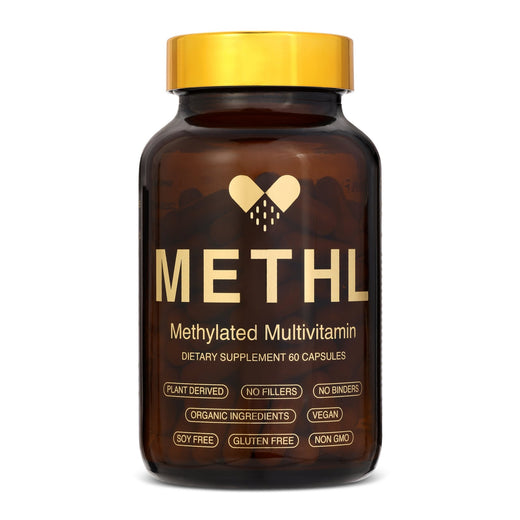
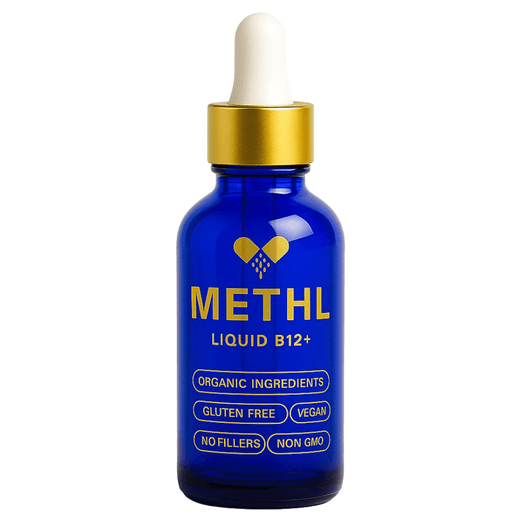
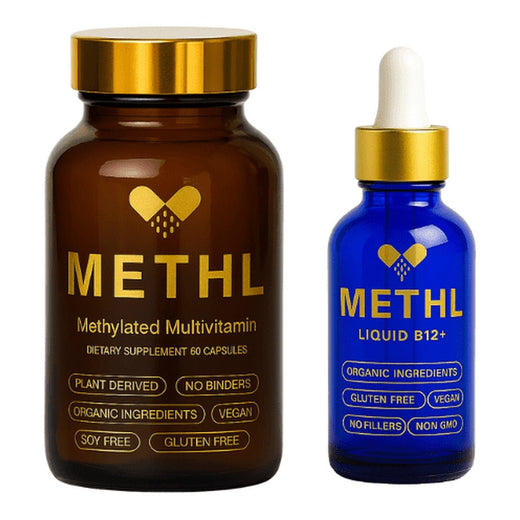
At METHL, both of our core products are built on the active form. Our METHL methylated multivitamin uses 5-MTHF folate, methylcobalamin B12, and P5P B6 alongside fermented organic greens, with no synthetic folic acid. It covers methylated folate plus a full daily multivitamin in one bottle. If you want a focused, flexible B-vitamin option (handy if you take a separate multi or want to adjust your dose), our METHL methylated B-complex delivers methylated B vitamins in liquid form. Both are vegan, non-GMO, third-party tested, made in the USA, and backed by a 60-day guarantee. Choose the multivitamin if you want comprehensive daily coverage; choose the B-complex if you mainly want methylated B support to stack with what you already take.
Frequently asked questions about L-methylfolate
Is 5-MTHF the same as L-methylfolate?
Yes. 5-MTHF, L-5-MTHF, and L-methylfolate all refer to the same active form of folate (L-5-methyltetrahydrofolate). The labels differ but the molecule is the same.
What is the difference between L-methylfolate and folic acid?
Folic acid is a synthetic form that your body must convert through several enzyme steps before it can use it. L-methylfolate is the already-active form, so it doesn't depend on that final MTHFR conversion step.
Do I need an MTHFR test before taking 5-MTHF?
No. L-methylfolate is the active form of a normal nutrient, so you don't need a genetic test to choose it. Many people pick the active form as a practical default. If you're managing a specific health concern, talk to your clinician about testing and dosing.
Can you take too much L-methylfolate?
As with any nutrient, more is not automatically better, so follow the label and recommended amounts. The classic upper-limit concern (masking a B12 deficiency) is tied to high intakes of synthetic folic acid. If you're unsure about the right amount for you, ask your clinician.
Is L-methylfolate safe during pregnancy?
Adequate folate is a well-established part of prenatal nutrition, and many prenatal formulas use the active form. The right form and amount for your pregnancy should be decided with your OB or clinician.
The bottom line on L-methylfolate
L-methylfolate (5-MTHF) is the active form of folate your body uses, the finished product that folic acid has to be converted into first. For people with reduced-function MTHFR variants, anyone supporting a pregnancy, or those who want the body-ready form, choosing a supplement built on 5-MTHF is a sensible default. Ready to shop the active form? Browse our methylated multivitamins & B vitamins or start with the all-in-one METHL methylated multivitamin made with 5-MTHF, methylcobalamin, and fermented organic greens.
Related: Methylfolate supplement