
Methylated vitamins are nutrients delivered in their active, body-ready forms (like 5-MTHF folate and methylcobalamin B12), so your cells can use them without an extra conversion step. Standard supplements often use synthetic forms (folic acid, cyanocobalamin) that your body has to convert first, and for a large share of people that conversion is slow or incomplete. This guide explains what methylated vitamins are, why the form matters, and who tends to feel the difference.
Want the short version? You can shop methylated multivitamins & B vitamins built on active forms your body recognizes, then come back and read the why.
What are methylated vitamins?
Methylated vitamins are B vitamins (and a few related nutrients) supplied in the form your body uses inside the cell. The two most discussed are methylfolate, written as 5-MTHF, and methylcobalamin, the active form of B12. Pyridoxal-5-phosphate (P5P) is the active form of B6 and often gets grouped in too.
The word "methylated" points to a real chemical step: these nutrients carry a methyl group already attached, which is the configuration your enzymes are looking for. With a conventional supplement, the synthetic version has to pass through one or more conversion steps, usually in the liver, before it can do its job. A methylated formula skips that line.
That is the whole idea. Same vitamin, more usable form.
Why does the form of a vitamin matter?
Form matters because a vitamin only helps once it reaches its active state. Folic acid, the synthetic folate found in most fortified foods and cheap multivitamins, is not the form your cells run on. Your body converts it through several steps, and the final step depends on an enzyme called MTHFR (methylenetetrahydrofolate reductase). Methylfolate, on the other hand, is already past that bottleneck.
The same logic applies to B12. Cyanocobalamin, the common synthetic form, has to shed a small cyanide molecule and be reworked before your body can use it. Methylcobalamin arrives ready.
For people whose conversion machinery works well, synthetic forms can still get the job done, only less directly. For people whose conversion is impaired, the active form is the more reliable choice. Either way, you are removing a step rather than adding risk.
There is a second, quieter reason form matters. When the body cannot convert folic acid quickly enough, some of it can circulate unconverted. That is not dangerous for most people, but it is not doing much good either. It is folate that never reached the part of the cycle where it counts. Methylfolate avoids that situation by arriving in the form the cell is waiting for, so more of what you take ends up where it is supposed to go.
What is methylation, and why does it depend on these vitamins?
Methylation is a basic cellular process, the transfer of a methyl group from one molecule to another, and it runs constantly throughout the body. It plays a role in:
- Energy metabolism: turning food into usable fuel
- Neurotransmitter activity: including serotonin and dopamine pathways
- DNA maintenance and gene regulation
- Detoxification and liver function
- Homocysteine balance, which is relevant to heart health
Methylated B vitamins are direct inputs to this cycle. Folate and B12 in their active forms feed the reactions that keep methylation moving. That is why the conversation about "methylated vitamins" so often circles back to folate and B12 specifically.
One marker ties this together for many people: homocysteine. Methylation helps recycle homocysteine into other useful compounds, and active folate and B12 are part of that handoff. When the cycle runs smoothly, homocysteine stays in a healthy range. When inputs are low or poorly converted, levels can drift up. It is one of the more concrete ways the form of a vitamin connects to something a clinician can measure.

What is the MTHFR gene, and how does it connect to methylated vitamins?
MTHFR is the gene that codes for the enzyme responsible for the final step in turning folate into its active 5-MTHF form. Common variants in this gene can reduce how efficiently that enzyme works. Research suggests a meaningful portion of the population carries at least one MTHFR variant, though estimates vary by population and by which variant is measured, so treat any single percentage with caution.
If your MTHFR enzyme is less efficient, your body has a harder time converting folic acid into the form it can use. Choosing methylated folate sidesteps that step entirely. You supply the nutrient in the form the enzyme would have produced. This is the practical reason methylated vitamins come up so often in discussions about MTHFR. For a deeper look, read our complete MTHFR guide.
Methylated vs synthetic vitamins: what is the real difference?
The difference is conversion. The common forms line up like this:
- Folate: methylfolate (5-MTHF) is active; folic acid is synthetic and must be converted
- B12: methylcobalamin is active; cyanocobalamin is synthetic and must be converted
- B6: P5P (pyridoxal-5-phosphate) is active; pyridoxine HCl is the cheaper synthetic form
- B2: riboflavin-5-phosphate is the active form, and it also supports the MTHFR enzyme itself
Methylated forms cost more to produce, which is why budget supplements rarely use them. If you want a closer side-by-side, we break it down in methylfolate vs folic acid, and we cover folate in depth in our L-methylfolate (5-MTHF) guide.
Who benefits most from methylated vitamins?
Active-form nutrients are useful for most adults, since you remove a conversion step regardless of your genetics. A few groups tend to notice the difference more:
- People with an MTHFR variant: or a family history of one
- Pregnant and trying-to-conceive women: folate is critical for healthy neural tube development, and many practitioners now favor methylfolate
- Adults over 50: B12 absorption tends to decline with age
- Vegetarians and vegans: plant-based diets are naturally low in B12
- People with gut conditions: celiac, Crohn's, and IBS can impair nutrient absorption
- People on certain medications: metformin, acid reducers, and oral contraceptives can deplete B vitamins
If you take a multivitamin and feel no difference, the form of the nutrients is one of the first things worth checking. This advice is educational, not a substitute for guidance from your own clinician.
How to choose a methylated multivitamin
Not every product labeled "methylated" lives up to the name. Read the supplement facts panel and check the actual forms:
- Folate: look for "5-MTHF," "methylfolate," "Quatrefolic," or "Metafolin." If you see "folic acid," the product is not methylated.
- B12: look for methylcobalamin, not cyanocobalamin.
- B6: look for P5P (pyridoxal-5-phosphate) rather than pyridoxine HCl.
- The whole B complex: some brands methylate only folate and B12 and leave the rest synthetic. A fully methylated formula uses active forms across the board.
- Other ingredients: watch for artificial colors, titanium dioxide, and unnecessary fillers.
The rest of the label counts too, beyond the headline nutrients. A clean methylated multivitamin keeps the supporting cast simple: minerals in forms your body absorbs well, vitamins from recognizable sources, and as few binders and flow agents as the manufacturing allows. The point of choosing active forms is undercut if the same product leans on cheap fillers everywhere else.
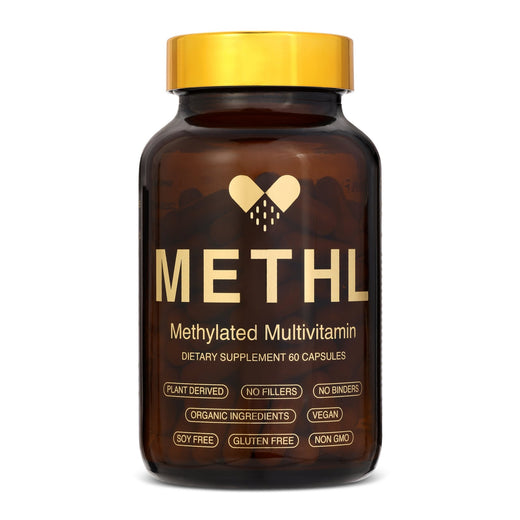
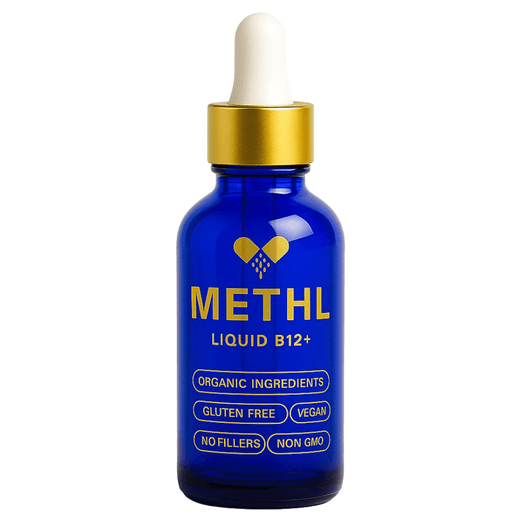
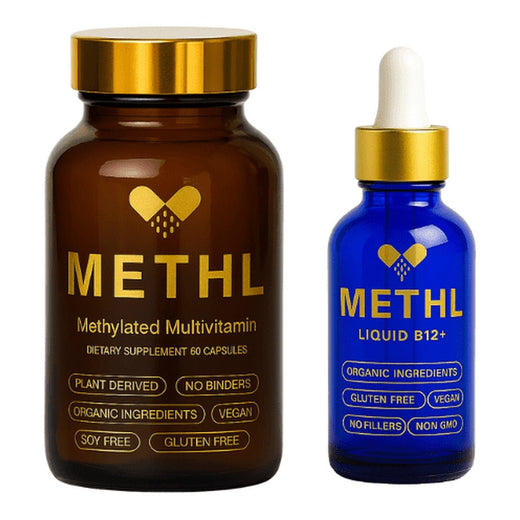
This is the standard METHL's methylated multivitamin is built to meet: active-form B vitamins across the complex, fermented organic greens, no synthetic folic acid, third-party tested, vegan and non-GMO, and a simple two-capsule daily serving. It is made in the USA and backed by a 60-day guarantee. For B vitamins on their own, the methylated liquid B complex pairs well with it, and our B complex guide explains how the two fit together. The formula was developed by founder Chris Santos after he discovered his own MTHFR variant and found that conventional supplements did little for him. You can read the background on our story page.
Frequently asked questions
What does "methylated" mean on a vitamin label?
It means the nutrient is supplied in its active, ready-to-use form with a methyl group already attached, such as methylfolate (5-MTHF) or methylcobalamin B12, so your body does not have to convert it before use.
Do I need an MTHFR test before taking methylated vitamins?
No. Methylated forms are safe and usable whether or not you carry an MTHFR variant, because they skip the conversion step everyone shares. A test can be informative, but it is not required to benefit from active-form nutrients. Talk with your clinician about testing if you are curious.
Are methylated vitamins better than regular vitamins?
"Better" depends on the person. Active forms remove a conversion step, which is an advantage for anyone and especially for people whose conversion is impaired. For people who convert synthetic forms well, the practical gap is smaller, but the active form is still the more direct option.
Can you take too much methylfolate?
Most people tolerate methylfolate well at the doses found in a daily multivitamin. Some individuals are sensitive to higher doses and prefer to start low. If you take other medications or are pregnant, check with your clinician about the right amount for you.
Is folic acid bad for you?
For most people folic acid is not harmful, but it is a synthetic form that requires conversion. People with reduced MTHFR activity may not convert it efficiently, which is why methylfolate is often the preferred choice in those cases.
The bottom line
Methylated vitamins are the same essential nutrients delivered in the form your body uses directly. The benefit is straightforward: fewer conversion steps, a more reliable result, and a formula that works with your biology rather than around it. If you have struggled with conventional multivitamins or know you carry an MTHFR variant, the active form is a sensible place to start.
Ready to switch to active forms? Browse the full range of methylated multivitamins and B vitamins, or go straight to METHL's methylated multivitamin.
Related reading: What Is a Methylated Multivitamin? (And Who Actually Needs One)