Last reviewed June 2026. This article is for education. It is not medical advice, and it is not intended to diagnose, treat, cure, or prevent any disease. Talk with your clinician before changing a supplement routine.
If you have ever flipped a B12 bottle over and seen the word cyanocobalamin, you have met the most common form of vitamin B12 on the shelf. It is cheap, stable, and it has been the industry default for decades. But it is not the form your cells use. Your body has to convert it first, and that conversion is where many people fall short.
This guide breaks down the real difference between methylcobalamin and cyanocobalamin, why the methylated form is the one your body can put to work right away, and how to tell which one you are actually buying.
The short version
- Cyanocobalamin is a synthetic, shelf-stable form of B12. Your body has to strip off a cyanide molecule and convert it into an active form before it can be used.
- Methylcobalamin is a naturally occurring, already-active ("methylated") form of B12. It is body-ready, no conversion required.
- Methylcobalamin is one of the two coenzyme forms your cells use directly to support normal energy metabolism, nervous system function, red blood cell formation, and homocysteine metabolism.
- People with certain common genetic variants (such as MTHFR) may convert synthetic B vitamins less efficiently, which is why the pre-converted form matters to them.
What vitamin B12 actually does
Vitamin B12, or cobalamin, is a water-soluble nutrient your body cannot make on its own. According to the National Institutes of Health Office of Dietary Supplements, B12 is required for normal red blood cell formation, neurological function, and DNA synthesis. It is also a cofactor in the methylation cycle, the behind-the-scenes chemistry that helps regulate homocysteine, a compound the body keeps in balance as part of normal metabolism.
Most labels skip what matters most. Vitamin B12 is not one molecule. It is a family of related compounds called cobalamins, and the form printed on the label decides how much work your body has to do before it gets any benefit.
Cyanocobalamin: the synthetic standard
Cyanocobalamin does not occur in nature. Manufacturers make it in a lab by attaching a cyanide molecule to the cobalamin structure, which makes it stable and cheap to produce. That stability is why it dominates mass-market multivitamins and bargain B12 shots.
The catch is that cyanocobalamin is biologically inactive on arrival. Before your cells can use it, your body has to remove the cyanide group and convert the molecule into one of the two active coenzyme forms. For many people that conversion happens well enough. For others, especially those with genetic or absorption differences, it is a less reliable assumption than the label implies.
Methylcobalamin: the active, body-ready form
Methylcobalamin is one of the two coenzyme forms of B12 that occur naturally in the body and in food. The "methyl" group attached to it is the same one your methylation cycle is built around. Because it is already in an active configuration, methylcobalamin does not require the extra conversion step that cyanocobalamin does.
In plain terms: methylcobalamin is the form your cells recognize and use directly to support normal energy metabolism and nervous system function. You are not asking your body to do chemistry it may or may not do efficiently. You are handing it the finished part.
The conversion step most people overlook
Your methylation cycle relies on enzymes to turn folate and B12 into their usable forms. One of the best-studied is MTHFR (methylenetetrahydrofolate reductase). Common variations in the MTHFR gene are widespread in the general population, and they can reduce how efficiently the body activates synthetic forms of folate and, downstream, how smoothly the whole methylation cycle runs.
This is the same logic behind choosing methylfolate over folic acid. If you are going to use the pre-activated form of folate to bypass a conversion bottleneck, it makes sense to pair it with the pre-activated form of B12. The two work together inside the methylation cycle, which is why methylated B12 and methylated folate are so often formulated side by side. Our deeper explainer on L-methylfolate and 5-MTHF walks through that pairing in full.
Methylcobalamin vs cyanocobalamin: side by side
| Methylcobalamin | Cyanocobalamin | |
|---|---|---|
| Origin | Naturally occurring, found in the body and food | Synthetic, lab-made |
| Form | Already active (coenzyme form) | Inactive until converted |
| Conversion needed | None, body-ready | Yes, must remove cyanide group and activate |
| Contains a cyanide molecule | No | Yes (trace, removed during conversion) |
| Best suited for | Anyone wanting the body-ready form, especially those with MTHFR variants | Cost-driven mass-market formulas |
| Cost to manufacture | Higher | Lower |
So is methylcobalamin "better"?
For supporting the body with the form it can use immediately, methylcobalamin has a clear logic on its side: no conversion step, no synthetic cyanide group, and a structure that slots straight into the methylation cycle. Cyanocobalamin is not dangerous, and for a lot of people it does the job. But if you are paying attention to what your body actually absorbs and uses, the body-ready form is the one worth choosing.
It is the same philosophy behind every product we make. A vitamin only counts if your body can use it. That is why we build with methylated forms from the start rather than the cheapest synthetic option.
Want methylcobalamin you can actually feel?
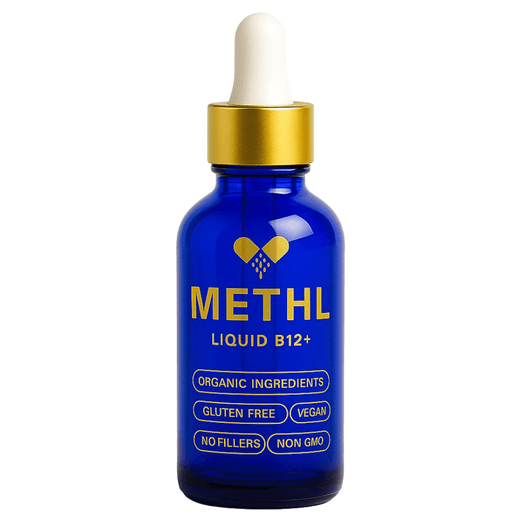
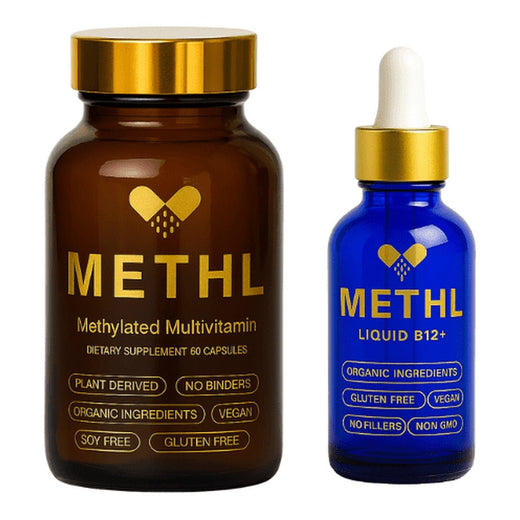
Our METHL Methylated B Complex Liquid Drops are built on methylcobalamin and methylfolate, the body-ready forms, with MTHFR support in mind. No synthetic cyanocobalamin, no folic acid.
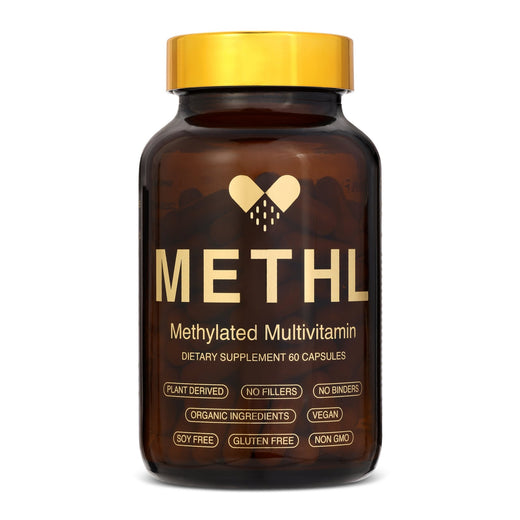
Shop METHL Liquid B Complex See the Methylated MultivitaminHow to read a B12 label like a pro
- Find the form, not just the dose. A big "5000 mcg B12" number means little if it is cyanocobalamin. Look for methylcobalamin or adenosylcobalamin in the ingredient line.
- Check the folate too. If the B12 is methylated but the folate is still folic acid, the formula is only half body-ready. You want methylfolate (5-MTHF) alongside it.
- Mind the "blend" trick. Some labels list a methylated form first to look premium, then bulk it out with the synthetic version. The cleaner formulas skip the synthetic forms entirely.
If you want to go one level deeper on the whole methylated-vitamin category, our guide on what makes methylated B vitamins different and our methylated multivitamin buyer's guide are the natural next reads.
Keep reading
Frequently asked questions
Is methylcobalamin the same as B12?
Methylcobalamin is one specific, naturally active form of vitamin B12. "B12" is the umbrella term for a family of cobalamins, which also includes cyanocobalamin and adenosylcobalamin. Methylcobalamin is the form your cells use directly without conversion.
Why do most multivitamins use cyanocobalamin instead?
Cyanocobalamin is synthetic, extremely shelf-stable, and far cheaper to produce. That makes it the default for mass-market formulas focused on cost rather than on the body-ready form.
Does the MTHFR gene affect which B12 I should choose?
Common MTHFR variants can reduce how efficiently the body activates synthetic B vitamins. Many people with these variants prefer the pre-activated forms, methylcobalamin and methylfolate, so the body has less conversion work to do. This is general education, not a diagnosis. Speak with your clinician.
Is the cyanide in cyanocobalamin dangerous?
The amount is tiny and is removed by the body during conversion, so it is not considered a safety concern at normal supplement doses. Many people simply prefer methylcobalamin because it skips the synthetic group altogether.
Can I take methylcobalamin every day?
B12 is water-soluble, and methylcobalamin is the form found naturally in the body. As with any supplement, follow the product label and check with your clinician about what is right for you.
Sources: National Institutes of Health, Office of Dietary Supplements, Vitamin B12 Fact Sheet for Health Professionals (ods.od.nih.gov). National Library of Medicine, MTHFR gene overview (medlineplus.gov/genetics). This article supports general wellness education and makes structure and function statements only. It does not diagnose, treat, cure, or prevent any disease.