Last reviewed June 2026. This article is for education. It is not medical advice, and it is not intended to diagnose, treat, cure, or prevent any disease. MTHFR is a genetics topic. Please talk with your clinician before acting on anything here.
If a genetic test or a curious doctor has ever mentioned the letters MTHFR to you, you have probably fallen down the rabbit hole since. The internet has a lot of loud opinions about it, and most of them skip the part that actually matters: which supplement forms make sense when your body activates B vitamins a little differently.
This guide stays in the lane that is supported and sensible. We will explain what MTHFR is in plain English, why it changes the supplements you reach for, and the short list of forms worth knowing about. Think of it as the grounded version you can take straight to your clinician.
What is MTHFR?
MTHFR stands for methylenetetrahydrofolate reductase, which is both a gene and the enzyme it codes for. That enzyme has one job that matters here: it helps convert folate into methylfolate (5-MTHF), the active form your body uses in the methylation cycle.
Common variations in the MTHFR gene, the most discussed being C677T and A1298C, are widespread in the general population. According to the National Library of Medicine, these are common variants, not rare disorders. What they can do is make the enzyme work less efficiently, which means the body may convert synthetic folic acid into active folate more slowly than average.
Having an MTHFR variant is not a diagnosis and does not mean something is wrong with you. It is simply useful information about how your body handles certain nutrients.
Why MTHFR changes which supplements you choose
The logic comes down to one thing. If your body activates synthetic B vitamins less efficiently, give it the forms that are already active.
A standard multivitamin uses folic acid and cyanocobalamin, both synthetic forms your body has to convert. For someone with a slower MTHFR enzyme, leaning on conversion is the step you might want to skip. The active, methylated forms supply the finished product, so the methylation cycle has less work to do upfront. That is the entire reason "methylated" supplements exist. Our explainer on what a methylated multivitamin is covers the concept in full.
The supplements that matter for MTHFR support
This is a short list on purpose. These are the forms most relevant to methylation support, framed as general wellness, not treatment.
1. Methylfolate (L-5-MTHF), the headline
This is the single most important swap. Methylfolate is the active form of folate that your MTHFR enzyme would normally produce. By taking it directly, you supply the body-ready form instead of relying on the conversion of folic acid. We go deep on it in the 5-MTHF complete guide, and the folic-acid comparison lives in methylfolate vs folic acid.
2. Methylcobalamin (active B12)
Folate and B12 work as a pair in the methylation cycle, so the active form of B12 belongs right next to methylfolate. Methylcobalamin is body-ready, unlike the synthetic cyanocobalamin in most multivitamins. The full breakdown is in methylcobalamin vs cyanocobalamin.
3. Active B6 (P5P) and B2 (riboflavin)
Vitamin B6 in its active form, pyridoxal-5-phosphate (P5P), and riboflavin (B2) both support the same methylation machinery. Riboflavin in particular is a cofactor the MTHFR enzyme itself relies on, which is why thoughtful formulas include the active B vitamins together rather than in isolation.
4. Choline and other methylation support nutrients
Choline contributes to the body's broader methylation pathways and is often under-consumed. It is a reasonable supporting nutrient to be aware of as part of an overall methylation-friendly diet and supplement routine.
5. Magnesium
Magnesium is a workhorse mineral involved in hundreds of enzymatic reactions, including ones tied to energy metabolism. It is not MTHFR-specific, but it is commonly low and worth keeping adequate as general support.
What to avoid if you have an MTHFR variant
The flip side of the list above is just as useful. When you are reading labels, the two synthetic forms to be aware of are:
- Folic acid, the synthetic form of folate. This is the one most people with MTHFR variants choose to move away from in favor of methylfolate.
- Cyanocobalamin, the synthetic form of B12, in favor of methylcobalamin.
You will find folic acid in most fortified foods and budget supplements, so the supplement is where you have the most control. Choosing active forms there is the easiest change to make.
The simplest approach: one methylated formula
You could buy methylfolate, methylcobalamin, P5P, and riboflavin as four separate bottles. Most people do not want to, and they do not have to. A well-built methylated multivitamin puts the active forms together in one daily dose, which is exactly what someone with an MTHFR variant is usually looking for.
Methylation support in one daily routine
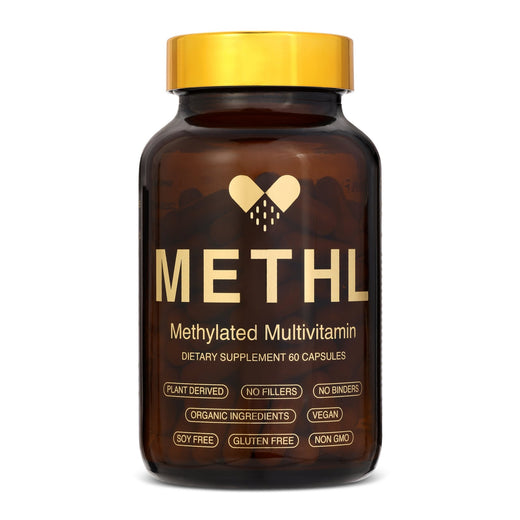
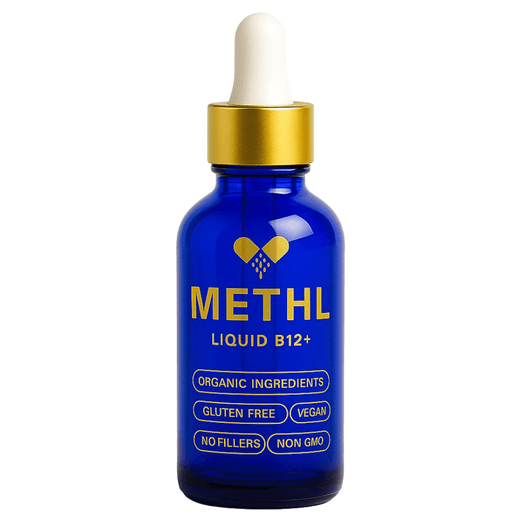
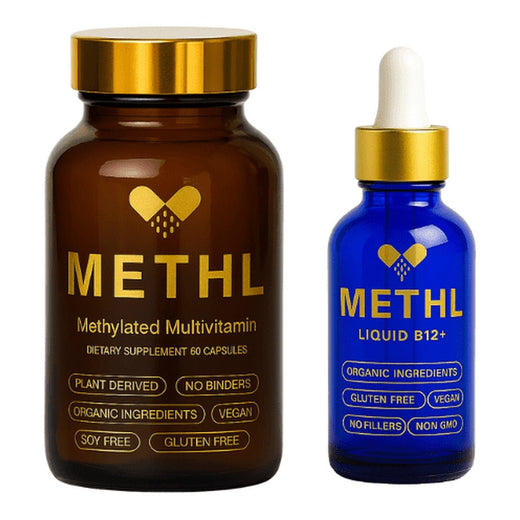
METHL is built around methylfolate and methylcobalamin, the active forms, with no folic acid and no synthetic B12. Pair the multivitamin with the Liquid B Complex for complete, MTHFR-minded B-vitamin support.
Shop the METHL Multivitamin + Liquid B Bundle Just the MultivitaminShould you get tested first?
You do not need an MTHFR test to choose active vitamin forms. Plenty of people take methylated supplements because they prefer the body-ready option. That said, if you are weighing bigger decisions or have a personal or family history that concerns you, MTHFR testing is something to discuss with your clinician, who can interpret the result in the context of your whole health picture rather than in isolation.
One more honest note: MTHFR is a topic where the internet often overpromises. Variants are common, the science is still developing, and no supplement is a treatment for a medical condition. The reasonable goal is simply to support normal methylation with the forms your body can use most directly. If you want to compare specific products, our methylated multivitamin buyer's guide lays them out side by side.
Keep reading
- Methylfolate vs folic acid
- Methylcobalamin vs cyanocobalamin
- Best methylated multivitamin: buyer's guide
Frequently asked questions
What are the best supplements for MTHFR?
The most relevant are the active B-vitamin forms: methylfolate (5-MTHF) and methylcobalamin (active B12), often alongside active B6 (P5P) and riboflavin (B2). These supply the body-ready forms so the methylation cycle relies less on conversion. This is general wellness support, not a treatment. Discuss your routine with your clinician.
Should people with MTHFR avoid folic acid?
Many people with MTHFR variants choose methylfolate over folic acid because their enzyme may convert the synthetic form less efficiently. Whether to avoid folic acid entirely is a personal decision best made with your clinician.
Can I just take a methylated multivitamin instead of separate B vitamins?
For most people, yes. A quality methylated multivitamin combines methylfolate, methylcobalamin, and the active B vitamins in one daily dose, which is simpler than managing several individual supplements.
Do I need a test to know if I should take methylated vitamins?
No. Active forms are a reasonable choice for anyone who prefers the body-ready option. Testing can add context but is not required. Your clinician can help you decide whether testing is worthwhile for you.
Is having an MTHFR variant dangerous?
MTHFR variants are common in the general population and are not a disease. They simply describe how efficiently your body activates certain B vitamins. Any health concerns should be discussed with a qualified clinician.
Sources: National Library of Medicine, MTHFR gene overview (medlineplus.gov/genetics). National Institutes of Health, Office of Dietary Supplements fact sheets on Folate and Vitamin B12 (ods.od.nih.gov). This article supports general wellness education and makes structure and function statements only. It does not diagnose, treat, cure, or prevent any disease, including any condition associated with MTHFR gene variants.
Related: MTHFR supplements