Last reviewed July 2026. This article is for education. It is not medical advice, and it is not intended to diagnose, treat, cure, or prevent any disease. Talk with your clinician before changing a supplement routine.
If you are planning a pregnancy or already expecting, you have probably seen “methylated prenatal” come up. This guide explains what that means and what to look for, so you can choose a prenatal with your OB or midwife. Pregnancy nutrition is one area where a general article should never replace your provider, so treat this as background for that conversation.
Important: a general multivitamin is not a prenatal. Use a prenatal your provider recommends.
Why folate form comes up in pregnancy
Folate is one of the most important nutrients before and during early pregnancy. The body uses it heavily, and needs rise well above the everyday amount. Traditional prenatals use folic acid, the synthetic form, which the body converts to the active form it uses. Methylfolate is already the active form. For people who convert folic acid slowly, including many with an MTHFR variant, the active form can be a more reliable way to get usable folate, which is why methylated prenatals exist. See methylfolate vs folic acid for the general comparison.
What a prenatal includes that a regular multivitamin may not
This is the key point. A prenatal is not just a multivitamin with a different label. It is formulated around pregnancy, which typically means adequate folate at a higher level, plus nutrients like iron, iodine, and often DHA that support pregnancy specifically. A general adult multivitamin, even a methylated one, may not provide these at the amounts pregnancy needs. That is exactly why you should not swap a regular multivitamin in for a prenatal.
What to look for in a methylated prenatal
- Adequate folate as methylfolate, at the level your provider recommends
- The other nutrients prenatals are built around, discussed with your provider
- Third-party testing for purity and potency
- A form and schedule you can actually keep up with through pregnancy
Bring the specific product to your OB or midwife rather than choosing on marketing alone.
Why timing matters, before and early
One reason providers raise folate so early is that the window when it matters most is often before many people know they are pregnant. That is why guidance commonly encourages adequate folate for anyone who could become pregnant, not only after a positive test. If you are planning ahead, this is a conversation to have with your provider sooner rather than later, so the right prenatal and folate form are in place at the right time. If a pregnancy was unplanned, the same advice applies from the moment you know: talk with your provider promptly about starting an appropriate prenatal. The point is not to create worry, it is that timing is part of why folate form and dose are worth getting right with a professional rather than improvising.
Food sources of folate alongside a prenatal
A prenatal does not replace a good diet, it complements one. Folate occurs naturally in leafy greens, lentils and beans, asparagus, avocado, and citrus, and building meals around these foods supports your overall intake. Whole-food folate comes in forms the body handles well, which is one more reason food remains the foundation even when you are taking a prenatal your provider recommended. Think of the prenatal as ensuring you reliably hit pregnancy-level needs, especially for nutrients that are hard to get enough of from food alone, while your meals do the everyday work. Your provider can help you balance the two for your situation.
Questions to bring to your provider
- What folate form and amount do you recommend for me, and when should I start?
- Given my history, does an active form of folate make sense?
- Which prenatal covers iron, iodine, and DHA at the right levels for me?
- Are there interactions with any medications or conditions I have?
A methylated prenatal is not out yet
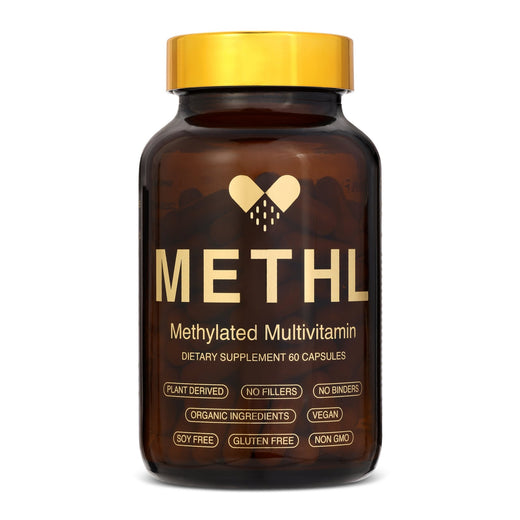
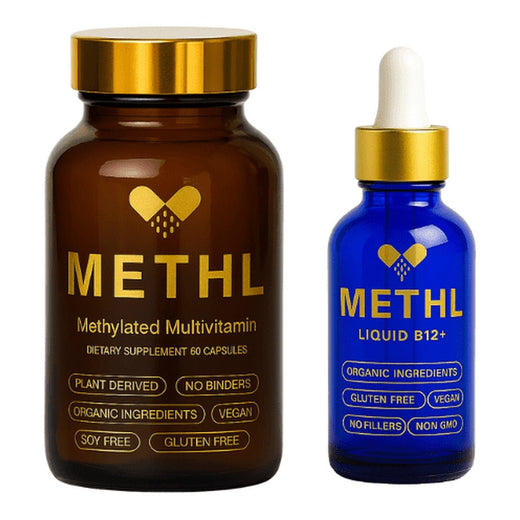
METHL makes a general adult multivitamin, which is not a prenatal and should not be used as one. We are exploring a properly formulated methylated prenatal.
Join the waitlist and we will email you the moment it launches.
Methylfolate and MTHFR in pregnancy, explained simply
Here is the plain-language version of why this comes up so often. Folate has to be in its active form for the body to use it. Folic acid, the synthetic form in many supplements and fortified foods, has to be converted first, and the MTHFR gene helps run that conversion. A common variant slows the step down. For someone who converts slowly, methylfolate is attractive because it is already active and skips the bottleneck. In pregnancy, where folate demand is high and the stakes are meaningful, that reliability is why many providers and brands have moved toward the active form. What this does not mean is that you should self-select a product or dose based on a suspected variant. Whether to test, which form to use, and how much are all decisions your OB or midwife makes with you, taking into account your history and the whole prenatal picture, not folate alone.
A note on adequate versus “has some”
One subtle trap is assuming any product with methylfolate on the label is prenatal-adequate. It is not. A general multivitamin may contain a modest amount of active folate that is fine for daily adult use but well below what pregnancy calls for, and it may lack iron, iodine, or DHA entirely. “Contains methylfolate” and “formulated as a prenatal” are different claims. This is exactly why your provider should sign off on the specific prenatal, and why we are clear that our general multivitamin does not fill that role.
Where METHL stands, honestly
We will be direct, because pregnancy is not the place for wishful marketing: METHL does not currently make a prenatal, and our general multivitamin is not formulated for pregnancy and should not be used as one. We would rather tell you that than let anyone assume otherwise. If a methylated prenatal is something you want from us, the waitlist above is how to say so, and it genuinely informs what we build next. Until then, your OB or midwife is the right source for the prenatal that fits you.
Keep reading
Frequently asked questions
Should a prenatal have methylfolate instead of folic acid?
Many prenatals now use methylfolate (the active form), which can matter for people who convert folic acid slowly. What matters most is getting adequate folate in a form your body uses, at the dose your provider recommends. Your OB or midwife should guide the specific product and dose.
How much folate do you need in pregnancy?
Folate needs rise before and during pregnancy, and the right amount and form are decided with your provider. A general multivitamin is not a substitute for a prenatal your provider recommends. Talk with your OB or midwife.
Can I use a regular methylated multivitamin as a prenatal?
No. A prenatal is formulated for pregnancy with specific nutrients and amounts, such as adequate folate, iron, iodine, and DHA, that a general multivitamin may not provide. Use a prenatal your provider recommends.
Does METHL make a prenatal?
Not currently. METHL makes a general adult methylated multivitamin, which is not formulated as a prenatal and should not be used as one. If you want a methylated prenatal, join our waitlist.
What should I look for in a methylated prenatal?
Adequate folate as methylfolate at the level your provider advises, plus the other nutrients prenatals are designed around. The specific product and dose should come from your OB or midwife, not a general article.
Sources: National Institutes of Health, Office of Dietary Supplements fact sheets on Folate and Vitamin B12 (ods.od.nih.gov). National Library of Medicine, MTHFR gene overview (medlineplus.gov/genetics). This article is general education about prenatal nutrition and is not medical advice. Pregnancy nutrition should be guided by your OB, midwife, or clinician. This article supports general wellness education and makes structure and function statements only. It does not diagnose, treat, cure, or prevent any disease.