Last reviewed July 2026. This article is for education. It is not medical advice, and it is not intended to diagnose, treat, cure, or prevent any disease. Talk with your clinician before changing a supplement routine.
If genetic testing has flagged an MTHFR variant for you, the first question is usually not what to take. It is what to stop taking. A few common supplement ingredients work against the exact thing you are trying to fix, and they hide in most drugstore multivitamins.
This guide covers the supplements and ingredients many people with an MTHFR variant choose to avoid, why they cause a problem, and what to reach for instead. For the flip side, see our guide to the best supplements for MTHFR.
Why the form of a supplement matters more with MTHFR
The MTHFR gene codes for an enzyme that helps turn folate into its active form. A common variant slows that enzyme down. When the conversion runs slow, the synthetic vitamins in a standard supplement can sit around unused while your body still comes up short on the active nutrient it needs. Read the background in our guide to what a methylated multivitamin is.
So the issue is rarely the vitamin itself. It is the form. Two swaps do most of the work, and both come down to avoiding the synthetic version.
The main supplements to avoid with MTHFR
1. Folic acid
Folic acid is the synthetic, oxidized form of folate used in cheap supplements and most fortified foods. Your body has to convert it before it can use it, and the MTHFR enzyme is part of that job. For someone whose variant slows the enzyme, folic acid is the single ingredient most worth avoiding. Choose methylfolate (5-MTHF) instead, the active form that needs no conversion.
2. Cyanocobalamin
Cyanocobalamin is the synthetic form of vitamin B12. Like folic acid, it has to be converted before your body can use it. The active form, methylcobalamin, arrives ready to use. If your B12 supplement or multivitamin lists cyanocobalamin, that is the one to trade out for a methylated B-complex.
3. Heavily fortified processed foods and gummy vitamins
Folic acid is added to a lot of processed foods, breads, cereals, pastas, and to many gummy vitamins that cannot hold the active forms as well. You will not avoid every trace, and you do not need to. The point is to stop stacking large doses of synthetic folic acid on top of a slow conversion.
Avoid this, choose that
| Avoid (synthetic) | Choose instead (active) |
|---|---|
| Folic acid | Methylfolate (L-5-MTHF) |
| Cyanocobalamin | Methylcobalamin |
| Pyridoxine HCl (B6), high dose | Pyridoxal-5-phosphate (P5P) |
| "Folic acid" fortified gummies | A complete methylated multivitamin |
One more thing to avoid: overdoing the active forms
Switching to the active forms is the goal, but more is not better. Some people feel wired or on edge if they take more methylfolate than their body needs, especially when they start at a high dose. Begin at the labeled dose and give it a couple of weeks before you judge it. We cover the signs to watch for in our guide to overmethylation symptoms and who should be cautious.
What to take instead
The simplest approach is to get the two swaps right in one product rather than juggling separate bottles. A complete methylated multivitamin covers active folate, active B12, and the rest of the B-complex together, so the nutrients support one another inside the methylation cycle. If you want a deeper dive on what to add, our MTHFR supplements collection and the best supplements for MTHFR guide lay out the full picture.
You do not have to throw out everything in your cabinet on day one. The high-value move is narrow: replace the folate and B12 sources, then let the rest of your routine stay as it is. Vitamin D, magnesium, omega-3s, and most minerals are not affected by the MTHFR conversion step, so there is no reason to swap them out. Focus your effort where the form actually matters, and you avoid both the expense and the overwhelm of rebuilding a whole regimen at once.
One caution worth repeating: avoiding folic acid does not mean avoiding folate. Folate is essential, and the goal is to get it in the form your body can use, not to cut it out. Trading folic acid for methylfolate keeps the nutrient and drops the conversion problem.
Active forms, no folic acid
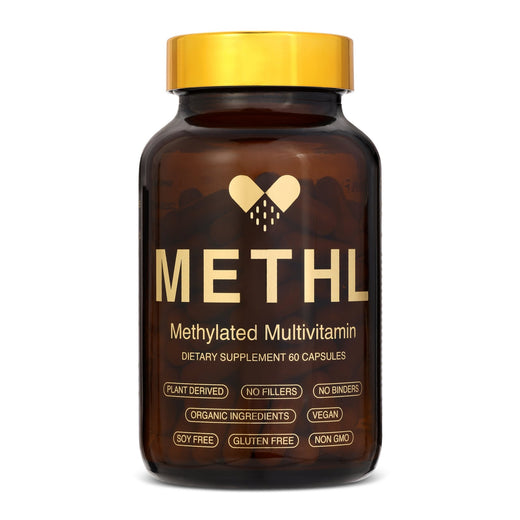
METHL uses methylfolate and methylcobalamin across the board, the two swaps that matter most for people with an MTHFR variant. No folic acid, no synthetic B12.
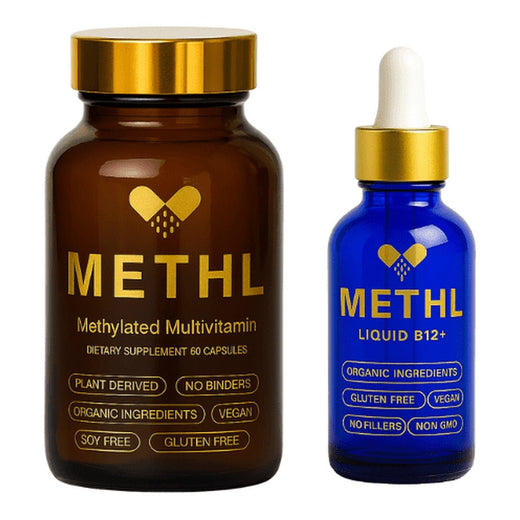
Shop the METHL Methylated Multivitamin See the Multivitamin + Liquid B BundleHow METHL handles the forms most people with MTHFR want to avoid
Because we build our own multivitamin, here is the reasoning behind our label. We start with the B vitamins, because that is where methylation lives. We use 5-MTHF (methylfolate) in place of folic acid and methylcobalamin in place of cyanocobalamin, so the folate and B12 arrive in the forms your body already uses. We chose P-5-P for B6 for the same reason. For the large share of people whose bodies convert folic acid slowly, that is the whole point: the formula does not lean on a conversion step. You can see those choices in our best methylated multivitamin lineup.
How to make the switch
- Read your current labels. Find the folate and B12 lines. If they say folic acid or cyanocobalamin, those are your swap targets.
- Pick one complete methylated formula rather than a shelf of single vitamins, so the B vitamins work together.
- Start at the labeled dose and take it with food in the morning.
- Give it a few weeks, and talk with your clinician if you take medication or have a health condition.
Keep reading
- Best supplements for MTHFR
- Overmethylation symptoms: who should be cautious
- Methylfolate vs folic acid
- What is a methylated multivitamin?
Frequently asked questions
What supplements should you avoid with MTHFR?
Most people with an MTHFR variant do better skipping synthetic folic acid and cyanocobalamin and choosing the active forms, methylfolate and methylcobalamin, instead. This is general education, not medical advice, so confirm your plan with a clinician.
Is folic acid bad if you have MTHFR?
Folic acid is the synthetic form your body has to convert. If a variant slows that conversion, unconverted folic acid can build up while you still fall short of active folate. Methylfolate skips the conversion step, so many people prefer it.
Can I take a regular multivitamin with MTHFR?
You can, but a standard multivitamin usually uses folic acid and cyanocobalamin, the two forms most people with a variant want to avoid. A methylated formula gives you the active versions instead.
Do I need an MTHFR test before changing supplements?
No. Many people choose the active forms without testing, since there is no downside to using nutrients the body can already use. A test can inform the decision if you want more certainty. Ask your clinician.
Can you take too much methylfolate?
Some people feel overstimulated if they take more active folate than they need. Start at the labeled dose and adjust with your clinician. Our guide to overmethylation covers this in detail.
Sources: National Institutes of Health, Office of Dietary Supplements fact sheets on Folate and Vitamin B12 (ods.od.nih.gov). National Library of Medicine, MTHFR gene overview (medlineplus.gov/genetics). This article supports general wellness education and makes structure and function statements only. It does not diagnose, treat, cure, or prevent any disease.