
Last reviewed June 2026. This article is for education. It is not medical advice, and it is not intended to diagnose, treat, cure, or prevent any disease. Talk with your clinician before changing a supplement routine.
Methylated vitamins for kids are the active, body-ready forms of folate and B vitamins, such as 5-MTHF folate and methylcobalamin B12, that some children's bodies use more easily than the synthetic versions found in most standard supplements. For most healthy kids, a balanced diet covers their needs. Methylated forms matter most for children who have trouble converting folic acid, and any supplement decision for a child should start with a conversation with your pediatrician. If you are new to the topic, our overview of what methylated vitamins are explains the basics.

If you have been reading about MTHFR, methylfolate, or "active" B vitamins and wondering whether they belong in your child's routine, this guide walks through what the terms mean, when the methylated forms matter for children, and how to make a calm, evidence-minded decision with your child's doctor. New to active nutrients? You can browse methylated multivitamins & B vitamins to see what these forms look like, but read the safety notes below first.
What are methylated vitamins for kids?
"Methylated" describes the chemical form of a vitamin. Several B vitamins exist in more than one form: an inactive version your body has to convert, and an already-active version that is ready to use. The three that come up most often are folate, B12, and B6.
- Folate (B9): the active form is 5-MTHF (also written L-methylfolate). The synthetic version added to many foods and supplements is folic acid, which the body has to convert in several steps.
- Vitamin B12: the active forms include methylcobalamin, versus the common synthetic form cyanocobalamin.
- Vitamin B6: the active form is P5P (pyridoxal-5-phosphate), versus plain pyridoxine.
For a child whose body converts these nutrients normally, which is most children, both forms do the same job. Families ask about methylated versions because a portion of the population carries gene variants that slow the conversion of folic acid into usable folate. In those cases, the already-active form skips a step.
Do children need methylated folate?
Most children do not need a special methylated supplement to be healthy. The single best source of folate and B vitamins for a child is food: leafy greens, beans and lentils, eggs, and (in many countries) folic-acid-fortified grains. A child eating a reasonably varied diet is usually getting what they need.
The methylated question becomes more relevant in a few specific situations: a child with a diagnosed MTHFR variant that affects folate conversion, a restrictive or selective diet, certain digestive or absorption conditions, or a doctor who has flagged low folate or B12 on bloodwork. Even then, the right form, dose, and whether a supplement is needed at all are medical decisions, not something to self-prescribe from a blog. Dosing for children differs from dosing for adults, and "more" is not "better" with B vitamins.
Folic acid vs methylfolate in children
This is the heart of most parents' questions. Folic acid is the synthetic, highly stable form used in fortification and the majority of children's multivitamins. It is well-studied and works fine for the many kids who convert it efficiently. Methylfolate (5-MTHF) is the active form the body uses directly.
The practical distinction is conversion. To use folic acid, the body runs it through several enzymatic steps, the last of which depends on the MTHFR enzyme. Children who carry common MTHFR variants may convert folic acid less efficiently. For them, a methylated form offers a more direct route, which is one reason interest in active forms has grown. A caution: this does not mean folic acid is harmful for typical kids, and it does not mean every child should switch. The form can matter for some children, and that is the kind of nuance worth raising with a pediatrician rather than deciding alone.
For a deeper look at the chemistry behind these forms across the whole family, our women's methylation guide covers folate conversion and MTHFR in plain language, and the principles apply broadly.
Are there signs a child might benefit from active B vitamins?
There is no reliable "symptom checklist" that diagnoses a methylation issue, and we will not pretend otherwise. Low energy, picky eating, or mood swings are part of normal childhood and have countless ordinary causes. What can point toward a true nutrient gap is objective information: a doctor-ordered blood panel showing low folate or B12, a known genetic variant, a very limited diet, or a malabsorption condition. If any of those apply, that is the moment to ask your pediatrician whether testing or a specific form makes sense. Chasing supplements based on vague symptoms tends to add cost and worry without adding clarity.
Food first: where kids get folate and B vitamins
Before any bottle enters the picture, remember how much of this is solved at the table. Folate fills dark leafy greens like spinach and kale, broccoli, beans and lentils, and avocado and citrus. B12 comes from eggs, dairy, fish, and meat, which is also why families following fully plant-based diets sometimes need to pay closer attention to B12. B6 is spread across poultry, fish, potatoes, and bananas. A child who eats across these groups over the course of a week is usually covering the bases without any supplement at all.
Supplements are easiest to reason about when you treat them as a targeted top-up rather than a daily insurance policy bought out of worry. If a child's diet is varied, the marginal benefit of adding a methylated multivitamin is small. Where a diet is narrow, such as a long stretch of beige, low-vegetable eating, a strict elimination diet, or a phase of extreme pickiness, the conversation shifts. That is another good reason to loop in your pediatrician rather than guessing at a product.
How to choose a methylated supplement for your family
If your pediatrician agrees a methylated supplement is appropriate, a few standards make the choice easier:
- Active forms on the label: look for 5-MTHF (L-methylfolate) rather than folic acid, methylcobalamin rather than cyanocobalamin, and P5P for B6.
- Age-appropriate dosing: a child's needs are far smaller than an adult's. Never assume you can split an adult product. Confirm the right amount with your doctor.
- Clean formulation: minimal added sugar, no unnecessary dyes, and clear, honest labeling.
- Third-party testing: independent verification that what is on the label is what is in the bottle.
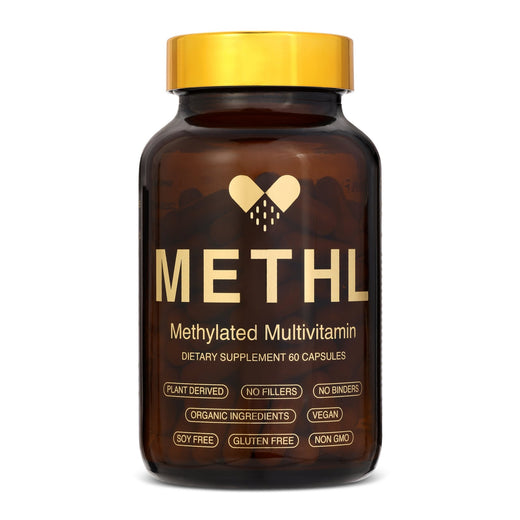
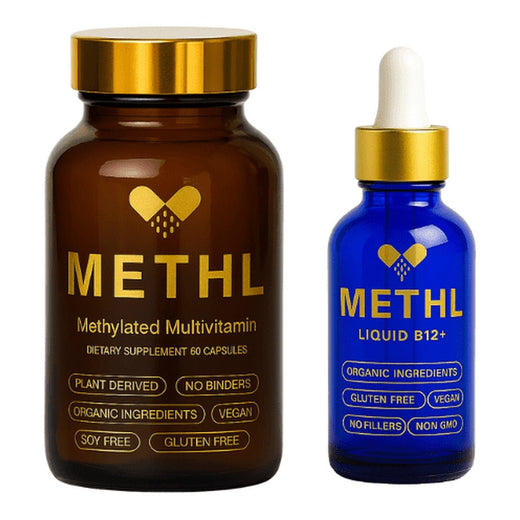
A direct word about our own line: METHL's methylated multivitamin is formulated as an adult and family-line product. It uses 5-MTHF folate, methylcobalamin B12, and P5P B6 in fermented organic greens, with no synthetic folic acid, made in the USA, third-party tested, vegan and non-GMO, and backed by a 60-day guarantee. We do not make a dedicated children's formula, and we will not pretend a dose meant for adults is right for a child. If you are shopping for an older teen or for the adults in your household and want active forms, it is a clean option. For younger children, talk to your pediatrician about the appropriate product and amount.
When to talk to a pediatrician
Before adding any new supplement to a child's routine, bring a pediatrician into the loop, ideally before you buy anything. Reach out if you are considering a supplement because of a suspected deficiency, if your child has a restrictive diet or a digestive condition, if there is a family history of MTHFR or folate issues, or if your child takes any medication that could interact. A short conversation can confirm whether testing is warranted, which nutrient form fits, and what dose is safe for your child's age and weight. That is the most important step in this guide.
Frequently asked questions
Are methylated vitamins safe for kids?
The active forms are the same nutrients found in food, so the forms carry no special risk on their own. The safety questions that matter are dose and necessity, both of which depend on a child's age, diet, and health. A pediatrician's input answers them before you start any supplement for a child.
What age can children take methylated vitamins?
There is no single answer that fits every child, because appropriate timing and dosing vary widely by age and need. Many young children get enough from food alone. Rather than going by a fixed age, ask your pediatrician whether a supplement is needed at all and, if so, which form and amount suit your child.
Do all kids need the methylated form instead of folic acid?
No. Most children convert folic acid well and do fine with standard forms or, better yet, food. Methylated folate is most relevant for children with conversion-related variants or specific medical reasons, identified with a doctor rather than self-diagnosed.
Can my child just take a smaller amount of an adult methylated multivitamin?
Not on assumption. Splitting an adult product can deliver an unpredictable dose, and B-vitamin amounts that are fine for adults can be too high for a child. If you want your child on active forms, confirm the right product and dose with your pediatrician.
What foods give kids methylated-style folate naturally?
Folate-rich whole foods build the foundation: leafy greens, broccoli, lentils, beans, avocado, and citrus. For most children, a varied diet rich in these foods is the most reliable approach.
The honest bottom line
Methylated vitamins for kids are not a must-have for every child. They are a specific tool for specific situations. Food first, then a doctor's guidance, then the right form at the right dose is the order that serves your family. If active forms are part of your household plan, explore METHL's methylated multivitamins and B vitamins and read more in our methylation guide. For the adults and older teens in your home, the methylated multivitamin is a clean, third-party-tested option. For younger children, make your pediatrician your first call.
This article is for general education and is not medical advice. Always consult your child's pediatrician before starting any supplement.